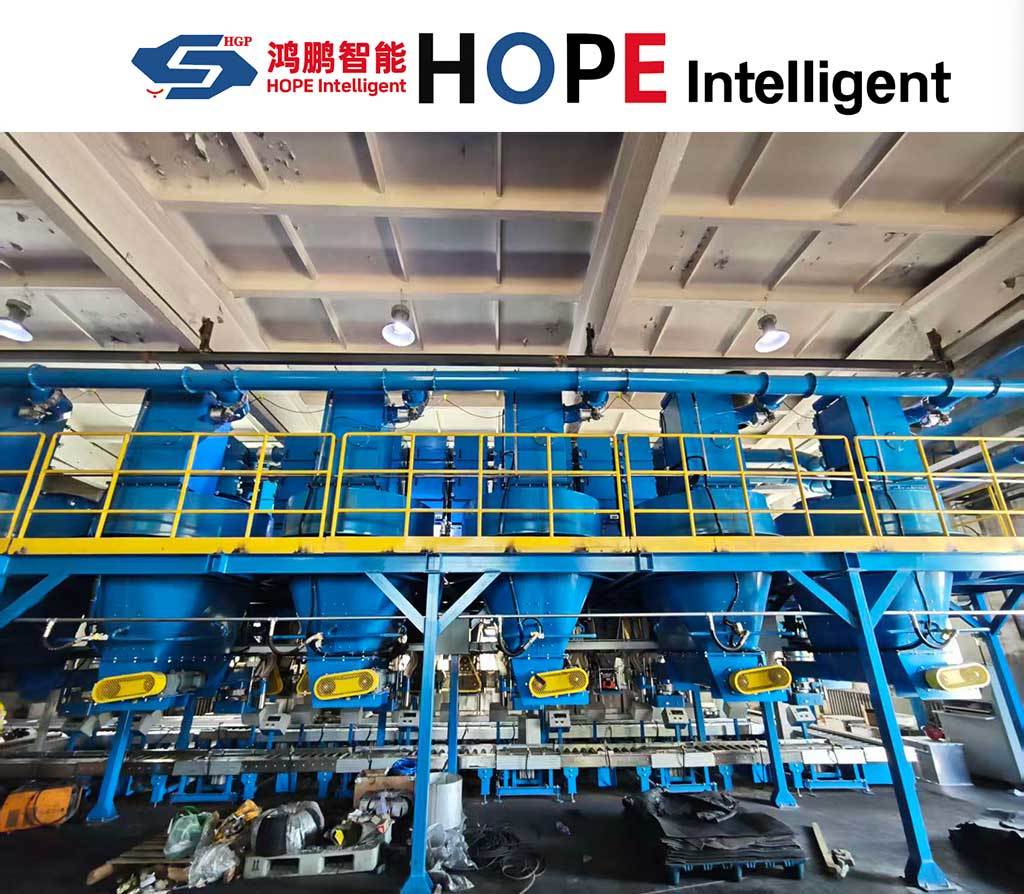
Smart Mixing Workshop Solution for Rubber Products Plants
Smart mixing workshop for rubber goods manufacturers (seals, hoses, conveyor belts): automated small chemicals batching + Mixer Feeding System + traceability system, solving the pain points of multiple recipes and frequent changeovers.
Application Scenarios
Rubber products companies (seals, oil seals, hoses, transmission belts, vibration dampers, etc.) are characterized by a large number of recipes, small batch weights and frequent changeovers — manual small chemicals batching is error-prone, dust exposure is high and batch traceability is difficult.
This solution centers on an intelligent multi-station automated small chemicals batching system (8–24 stations, 1 g readability, 1000–1500 batches/day), combined with the Mixer Feeding System and HopeMixer/MES data systems to build a low-manning, traceable smart mixing workshop.
Solution Configuration
Solution configuration:
- Intelligent multi-station automated small chemicals batching system (stations and scales configured by recipe count)
- Mixer Feeding System (fits 35–700 L internal mixers, incl. carbon black/oil/rubber weighing)
- HopeMixer intelligent control system for mixer feeding (recipe management + batch traceability)
- Mixing MES (optional): scheduling, QC, dashboards and inventory management
- Workshop dust collection & VOCs treatment (optional): customized to workshop air volume
Implementation is delivered in phases by subsystem scope — start with the small chemicals batching system, then gradually expand to the Mixer Feeding System and MES, protecting the customer's investment.
Solution Value
- Unmanned small chemicals batching: eliminates mis-dosing and missed dosing, batch records fully traceable
- High precision with 1 g readability: micro-ingredient weighing under control, consistent compound performance batch after batch
- Reduced dust exposure: enclosed weighing + local dust collection improves occupational health in the workshop
- Lower labor cost: small chemicals stations reduced from multiple operators to patrol staffing
- Integrated data: batching–mixing–QC data flows into MES, quality anomalies can be located quickly
Implementation Process
Solution Design
Tailored system engineering based on site requirements.
Equipment Manufacturing
In-house fabrication with strict quality control.
Installation & Commissioning
On-site installation and full-line commissioning.
Acceptance & Delivery
Performance verification, operator training and handover.
After-sales Maintenance
Responsive spare parts supply and lifelong technical support.